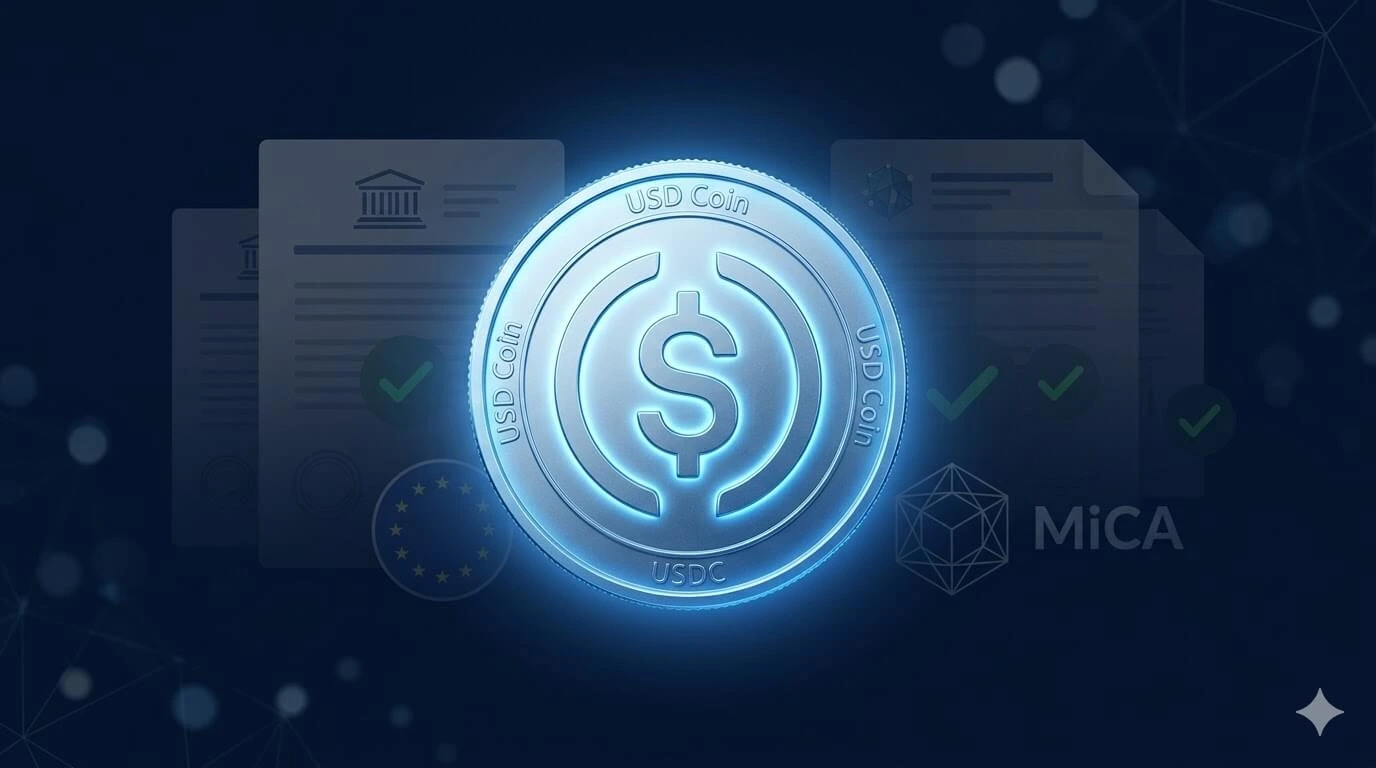
What is USDC: The Most Transparent Stablecoin on the Market
This article contains affiliate links. If you open an account through them, we may receive a commission at no extra cost to you.
While USDT dominates by volume, USDC has established itself as the regulated alternative of reference. Created in 2018 by Circle and Coinbase, USDC offers what many investors look for in a stablecoin: verifiable transparency and solid regulatory standing, especially relevant under the EU’s MiCA framework.
What is USDC
USDC (USD Coin) is a stablecoin issued by Circle, initially in partnership with Coinbase through the Centre consortium (now managed directly by Circle). Launched in 2018 as an ERC-20 token on Ethereum, it is also available on Solana, Stellar, Algorand, Avalanche, Base, and other networks.
Like USDT, 1 USDC = $1 USD. The fundamental difference lies in how that dollar is backed.
Reserves and transparency
Circle publishes monthly attestations by Deloitte (since 2022). USDC reserves consist exclusively of:
- Cash in insured bank accounts
- Short-term US Treasury bills (T-bills)
No commercial paper, no loans to affiliated companies. This is the key differentiator from USDT, which has faced controversy over reserve composition.
Regulatory advantage post-MiCA
The EU’s MiCA regulation, in force since 2024, sets strict requirements for stablecoin issuers: full reserves, independent audits, and authorization as an e-money token issuer.
Circle has been one of the most proactive issuers in adapting to MiCA — a significant advantage for European users, as USDC can operate with full guarantees in the EU while USDT faces greater regulatory uncertainty.
USDC vs USDT: comparison
| Feature | USDC | USDT |
|---|---|---|
| Issuer | Circle | Tether Ltd |
| Reserves | 100% cash + T-bills | Mix (cash, bonds, other) |
| Audits | Monthly by Deloitte | Quarterly reports |
| MiCA regulation | Better positioned | Greater uncertainty |
| Liquidity/Volume | High | Very high (higher) |
| Blockchains | Ethereum, Solana, Stellar, Base, others | Ethereum, Tron, Solana, others |
When to choose USDC over USDT
Choose USDC if you prioritize reserve transparency, operate primarily in the EU under MiCA, or use it for long-term savings (see how to protect your savings from inflation).
USDT remains the better choice if you need the highest possible liquidity or primarily work on Tron (TRC-20) for its low fees.
For more context, read what is USDT and what are stablecoins.
You can buy USDC directly on Kraken, a regulated exchange available across Europe and worldwide.

Comments